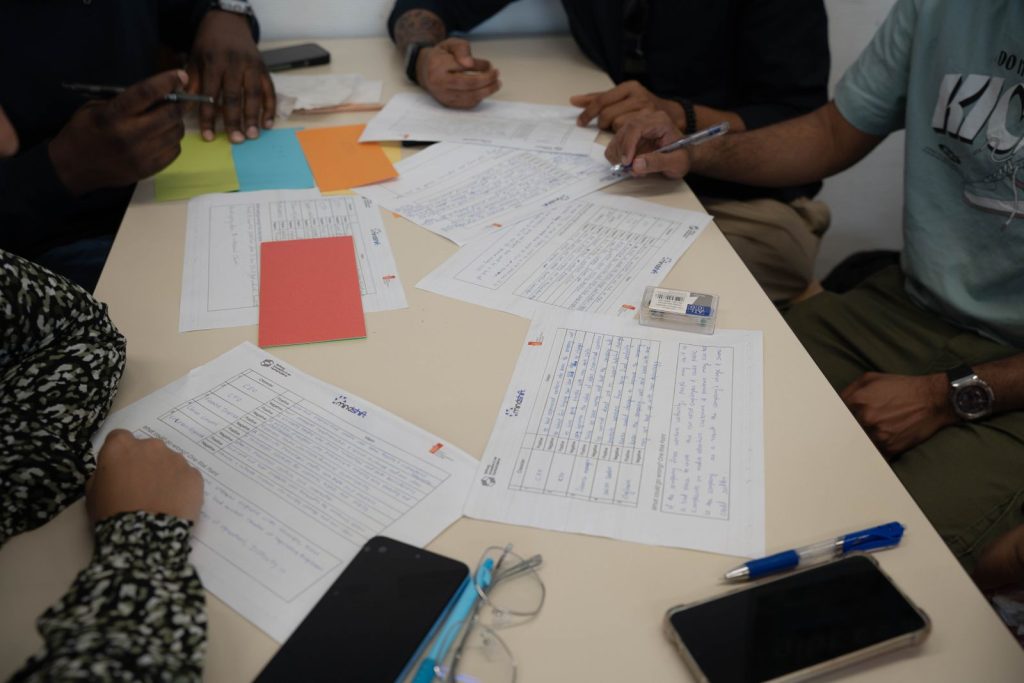

Many people want to learn a new skill but begin with an oversized objective: finish an entire course, read a whole book, or wait until there is enough free time. That kind of start makes learning easy to postpone. A more practical route is to choose one very small task in everyday work, do it a little better, and observe what changes.
A skill becomes useful only when it enters action. If you want to write more clearly, do not only read about writing: revise the opening of an important email. If you want to analyse data better, do not wait for a major project: inspect this week’s table and note three unusual patterns. A small task lowers pressure, creates fast feedback, and shows whether the new skill actually helps solve a problem.
Choose a small task that is real
The practice task should be small enough to finish in a short session, but real enough to produce a consequence or a response. “Watch more videos about presenting” is easy to do but makes improvement hard to see. By contrast, “open a five-minute meeting with one question that makes the goal clear” is specific: people hear it, react to it, and you can review the result.
For example, a manager learning to delegate more effectively can choose one recurring task that week. Instead of writing, “Please handle this for me,” the manager tries to state four things: the required outcome, the deadline, the room for autonomous judgement, and the update point. When the work is done, the manager asks the recipient which part was still unclear. One attempt does not make anyone a management expert, but it produces real data for a better next delegation.
Design a 20-to-30-minute practice session
A work-based learning session does not need to be long. Divide it into three parts. First, select exactly one behaviour to test. Next, apply it to a task already on your desk. Finally, spend a few minutes recording what happened. The aim is not to award yourself a perfect score, but to answer three questions: what did I do differently, what response did it produce, and what will I keep or change next time?
Someone learning to use AI for information synthesis, for instance, can take a public report, ask AI for a summary, and then compare five important points with the original source. If the summary misses a material condition, the lesson is not that “AI is useless.” The lesson may be to specify the summary criteria, retain links to source material, and verify numbers before use. A short practice session turns a new tool into a controlled work process.
Set an observable standard
The feeling that “I learned a lot today” is rarely enough to establish whether a skill has improved. Use one simple sign connected to the work itself. For writing, it could be the number of clarification questions after a draft is sent. For meetings, it could be the share of actions with a clear owner and deadline. For analysis, it could be the number of assumptions checked before a conclusion is offered.
The standard does not need sophisticated measurement. What matters is that it distinguishes doing something from improving it. If a new method takes a little longer but removes two rounds of revision, that is a signal worth keeping. If it adds steps without making a decision faster or clearer, it should be adjusted or dropped.
Do not learn alone in silence
Feedback from another person shortens the learning loop. There is no need to organise a formal evaluation. After trying a new approach, ask a colleague or recipient one focused question: “Which part made it easier for you to act?” or “What information is still missing for a decision?” A narrow question usually produces more usable feedback than a general comment such as “Was it okay?”
A marketing specialist learning to write briefs, for example, can send a short brief to the design team and ask whether they could start sketching immediately. If the team still needs to ask about the customer, the core message, or the output format, the writer has identified the next point to practise. When feedback attaches to a concrete work product, learning becomes less abstract and easier to repeat.
Create a sustainable rhythm
What causes many personal-development plans to fail is not a lack of materials, but an overly ambitious rhythm. Choosing one skill and two short practice sessions each week is often more sustainable than reserving a weekend day to catch up. After several weeks, review your notes to see which behaviours have become habits and which errors keep recurring.
Learning through one small real task does not create instant progress. It does create a dependable loop: try, observe, receive feedback, and adjust. When that loop sits inside work already being done, a new skill stops being an intention for some later time and gradually becomes a better way of working each day.