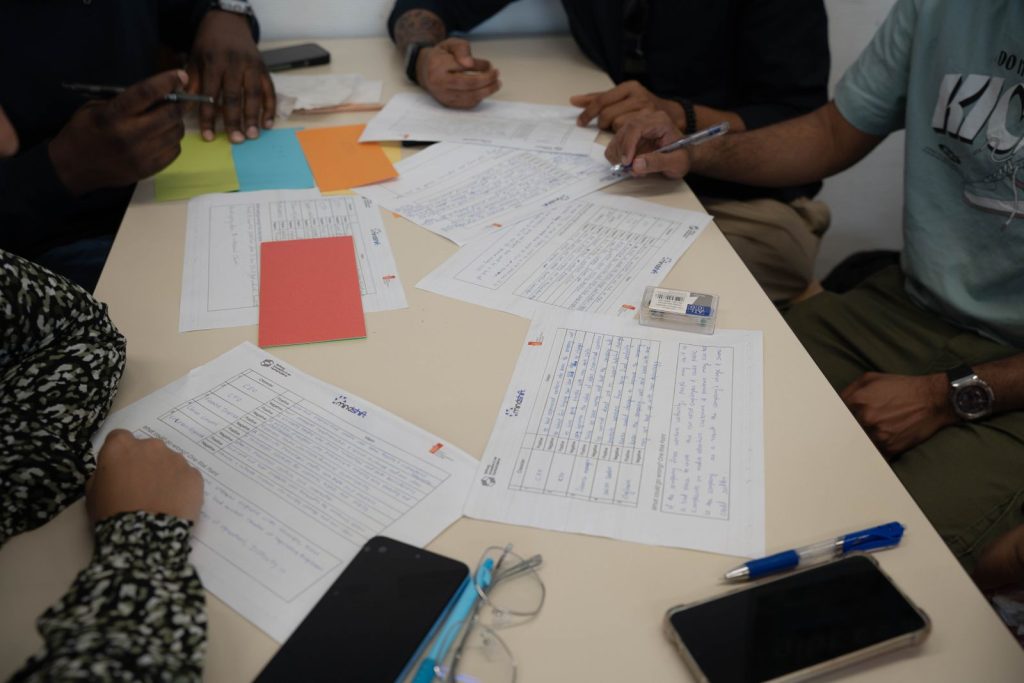

A workday can fill quickly with small demands: replying to messages, opening a document, checking a figure, handling an urgent request, and then trying to return to unfinished work. The problem is not that each task lacks value. The problem is that the mind repeatedly has to recover what it was doing, which standard it was applying, and what comes next. When switches become too frequent, a person can be busy all day while the important work barely advances.
Experimental research on task switching shows that alternating between tasks creates a time cost. That cost becomes larger when task rules are more complex and smaller when people have a clear cue to prepare (Rubinstein, Meyer & Evans, 2001). This does not mean doing only one thing all day. Its practical lesson is that a switch should be intentional and leave a route back, rather than allowing notifications or a feeling of urgency to set the order of work.
Separate response work from thinking work
Start by dividing work into two groups. Response work has a short deadline or someone waiting for an answer: confirming a schedule, resolving a fault with an immediate impact, or answering a question that blocks a colleague. Thinking work includes drafting an outline, analysing data, preparing a class, designing an option, or reading a difficult document. These groups need different rhythms. When both are left in one undifferentiated list, thinking work usually loses because it does not create the same urgent signal as a new message.
A simple approach is to set two or three response windows in the day, such as early morning, after lunch, and late afternoon. Outside those windows, handle only work that is genuinely blocking operations or has a committed near-term deadline. The purpose is not to become difficult to reach. It is to let others know when they can expect a response while protecting a sufficiently long stretch for work that needs depth.
Set the stopping point before you begin
People often leave a task midway because they do not know when it can reasonably stop. Before opening a document, write one result for the current block: “identify the three figures to verify”, “complete a 300-word opening”, or “select one option for the delivery process”. The result is smaller than the goal of the entire project, but clear enough to create a stopping point. Once it is reached, moving to another task leaves less unfinished tension and makes the return easier.
For example, a manager preparing a quarterly plan need not try to “finish the plan” in one session. The first block might only summarise the three main revenue movements; the next might record two assumptions still missing data. If an urgent call interrupts, write one line: “comparing channel A and B revenue; need to check the months with promotions”. That note becomes a preparation cue for the return and reduces the time needed to reconstruct the context.
Reduce the number of open windows
Open windows on a screen do not automatically reduce productivity, but every window representing unfinished work can invite a change of direction. Before a focused block, retain only the materials that directly support the result you set. New requests should go into one capture place rather than immediately becoming another tab. At the end of the block, review that capture place and sort each item: act now, place in a response window, delegate, or remove it.
This is particularly useful in management work, where new issues always arise. The aim is not to remove flexibility; it is to avoid treating every new signal as a priority. A genuinely urgent issue has a clear test: a safety risk, an affected customer, a same-day deadline, or a decision blocking the team. Other matters can wait for the next review window without lowering service quality.
Test the rhythm for one week
For one week, track three signs: how often important work is interrupted, how many work blocks reach their stated result, and which requests truly cannot wait. There is no need to measure every minute. A short end-of-day review is enough to reveal which times or notification types most often pull attention away. Then adjust the response windows or make each block’s result smaller.
Intentional switching is a normal part of modern work. What deserves reduction is rule-free switching, which leaks both time and attention. When important work has a clear block, new requests have a place to wait, and each return has a guiding note, a busy day is more likely to create real progress.
Reference
Rubinstein, J. S., Meyer, D. E., & Evans, J. E. (2001). Executive control of cognitive processes in task switching. Journal of Experimental Psychology: Human Perception and Performance, 27(4), 763–797.
Illustration: Unsplash.